Best Morocco Trails | Tours, Excursions & Activities in Morocco

Casablanca
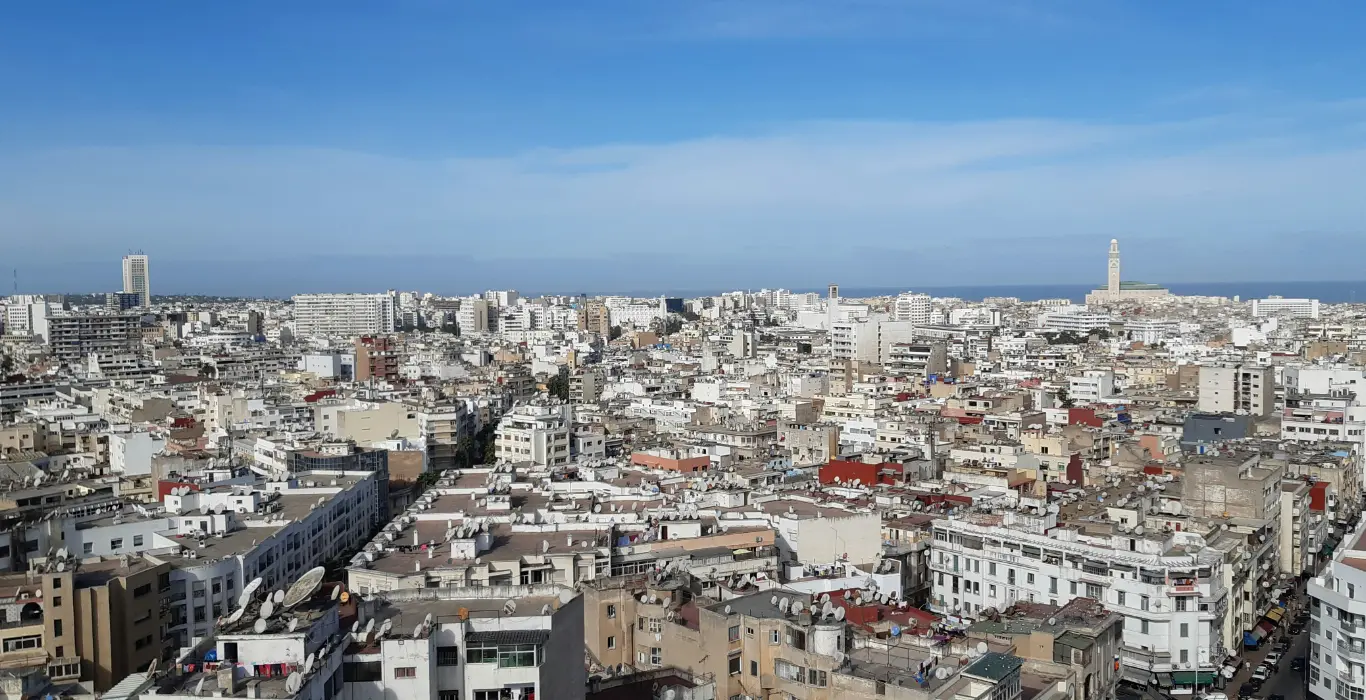
Casablanca (Arabic: الدار البيضاء, “Ad-Dār al-Bayḍāʾ,” meaning “The White House”) is Morocco’s largest city and economic capital, located on the country’s Atlantic coast. With a metropolitan population exceeding 4 million, it serves as the nation’s primary hub for commerce, industry, and finance. Unlike Morocco’s imperial cities steeped in ancient history, Casablanca embodies modernity and cosmopolitan energy, blending Art Deco architecture, bustling ports, and contemporary urban life. The city is the capital of the Casablanca-Settat region and home to the Port of Casablanca, one of Africa’s largest artificial ports and a vital gateway for international trade.
History
Casablanca’s origins trace back to the 7th century BCE with a Berber fishing settlement known as Anfa. The city grew in prominence under Portuguese rule in the 15th century, when it was called “Casa Branca.” After a devastating earthquake in 1755 destroyed much of the settlement, the Alaouite Sultan Mohammed ben Abdallah rebuilt the city, naming it “Dar al-Bayda” (The White House). During the French protectorate (1912–1956), Casablanca underwent rapid modernization, emerging as Morocco’s industrial and economic engine. The city gained global recognition through the iconic 1942 film Casablanca, though the movie was actually filmed in Hollywood. Post-independence, Casablanca continued to expand as Morocco’s commercial heartbeat, attracting migration from across the country and abroad.
Key Attractions
Architectural Landmarks
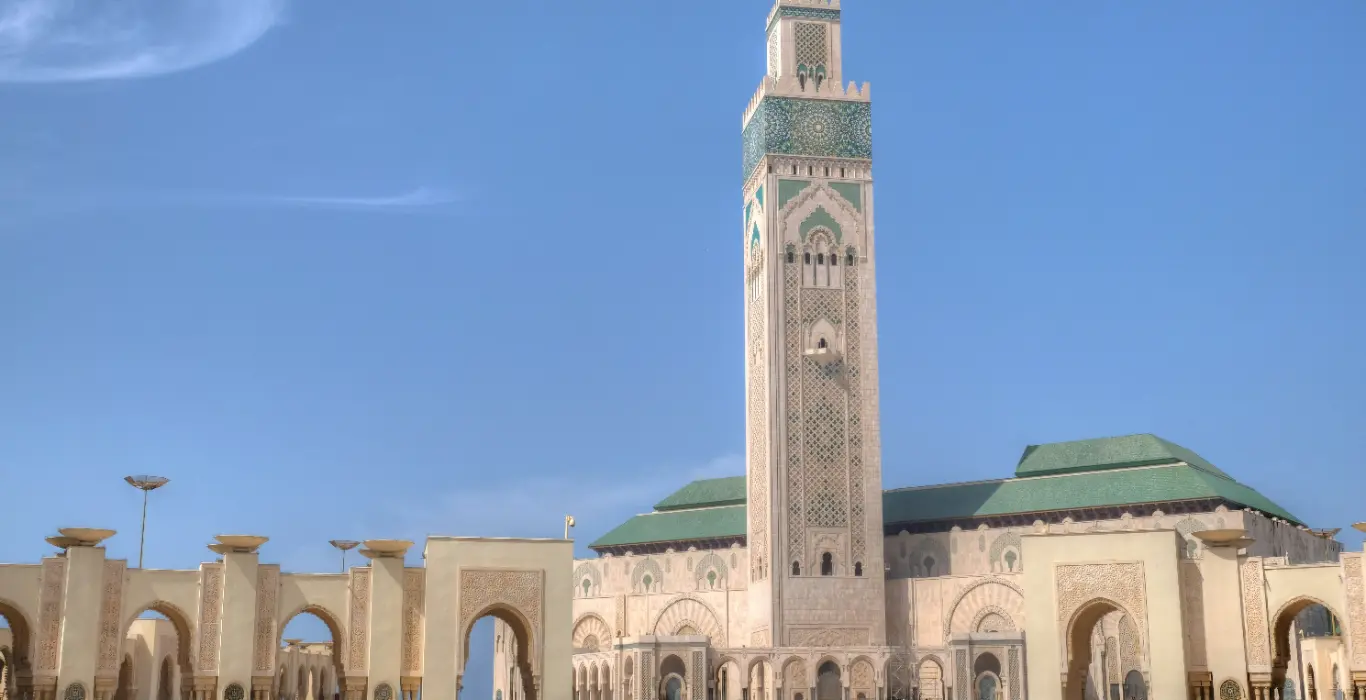
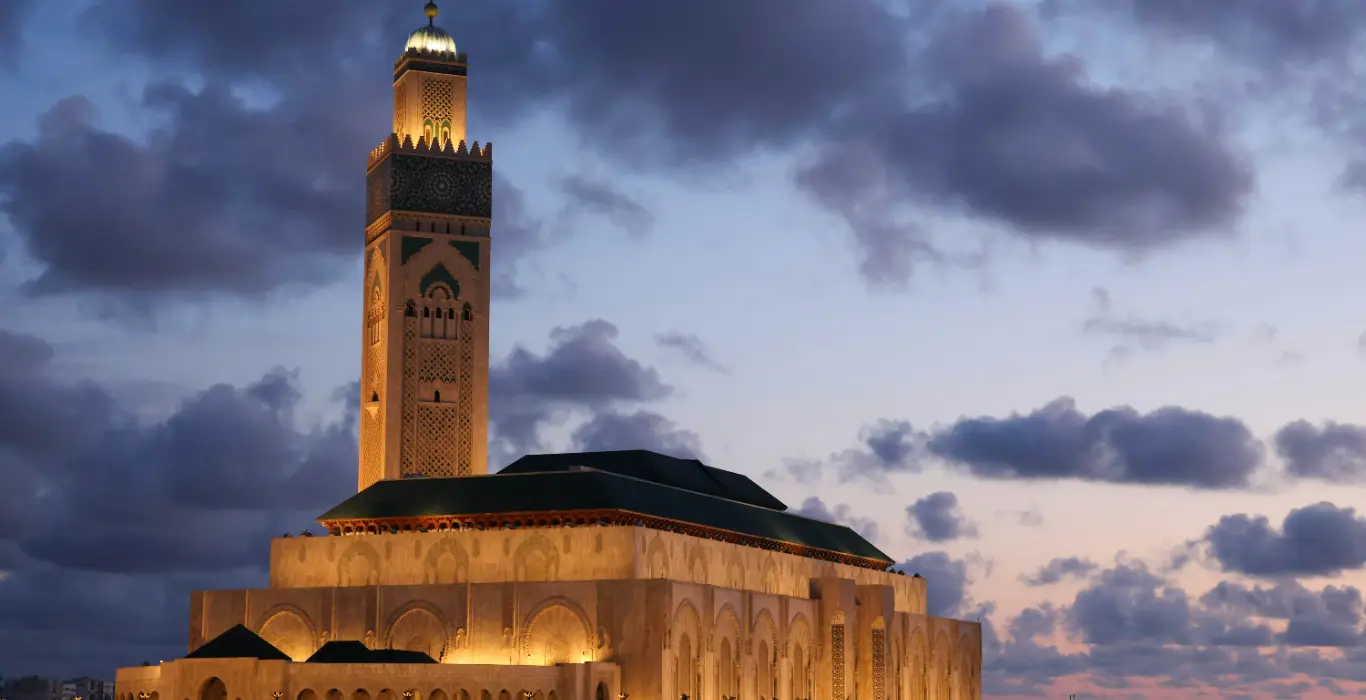
- Hassan II Mosque: One of the world’s largest mosques, featuring the tallest minaret globally (210 meters), intricate Moroccan craftsmanship, and a stunning oceanfront location. Its prayer hall accommodates 25,000 worshippers, with space for 80,000 more on the esplanade.
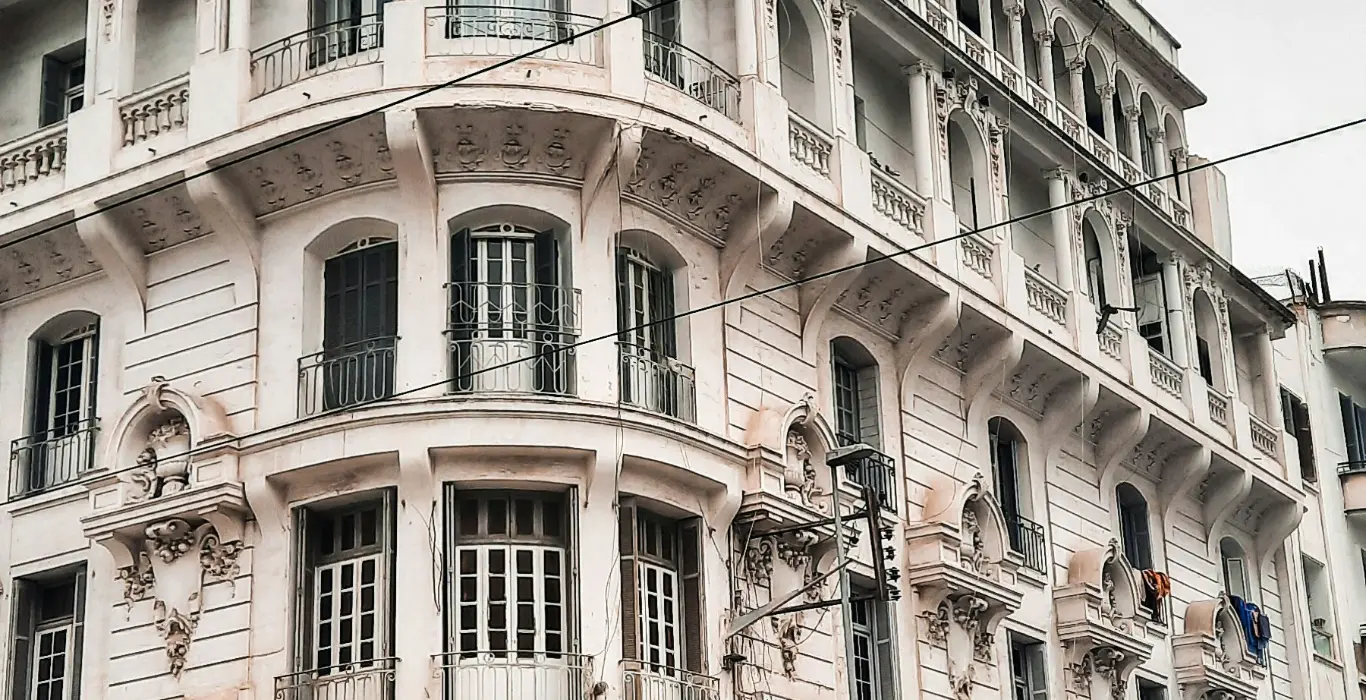
- Art Deco District: The city center showcases remarkable 1930s–1950s Art Deco and Neo-Moorish architecture, particularly along Boulevard Mohammed V and Place des Nations Unies.
- Mahkama du Pacha: A stunning administrative building blending traditional Moroccan design with modern function, featuring elaborate zellij tilework, carved plaster, and cedar wood.
Cultural & Leisure Sites
- Corniche Ain Diab: A vibrant seaside promenade lined with beaches, restaurants, cafes, and nightlife venues, popular with locals and visitors alike.
- Morocco Mall: One of Africa’s largest shopping centers, featuring luxury brands, an aquarium, ice rink, and panoramic ocean views.
- Old Medina: Though smaller than those in Fes or Marrakech, Casablanca’s historic quarter offers authentic souks, traditional eateries, and a glimpse into pre-modern urban life.
- Villa des Arts: A cultural center housed in a 1930s Art Deco villa, hosting contemporary art exhibitions and cultural events.
Historical & Educational Sites
- Sacred Heart Cathedral: A deconsecrated neo-Gothic cathedral from the French colonial era, now used for cultural exhibitions.
- Museum of Moroccan Judaism: The only museum dedicated to Jewish heritage in the Arab world, preserving Morocco’s rich Jewish history and traditions.
- Arab League Park: A sprawling green space in the city center, ideal for relaxation and people-watching.
Culture
Casablanca is Morocco’s most cosmopolitan city, where tradition meets global influences. Its diverse population includes Moroccans from all regions, expatriates, and international business communities, creating a dynamic cultural mosaic. The city is a center for contemporary Moroccan art, music, and cinema, hosting events like the Casablanca International Film Festival. Culinary offerings range from street-side seafood grills and traditional tagines to high-end international cuisine. While French and Arabic dominate daily life, English is increasingly common in business and tourism sectors. Casablanca’s pace is faster and more entrepreneurial than other Moroccan cities, reflecting its role as the nation’s economic driver.
Climate
Casablanca enjoys a Mediterranean climate with strong Atlantic influences, resulting in mild temperatures year-round. Summers are warm and dry, with average highs of 26-28°C (79-82°F) and cooling ocean breezes. Winters are cool and rainy, with daytime temperatures of 17-19°C (63-66°F) and occasional storms. Humidity is moderate to high due to the coastal location, and fog or mist can occur in early mornings. Spring (March-May) and autumn (September-November) offer the most comfortable weather for exploration, with pleasant temperatures and minimal rainfall.
Modern Casablanca
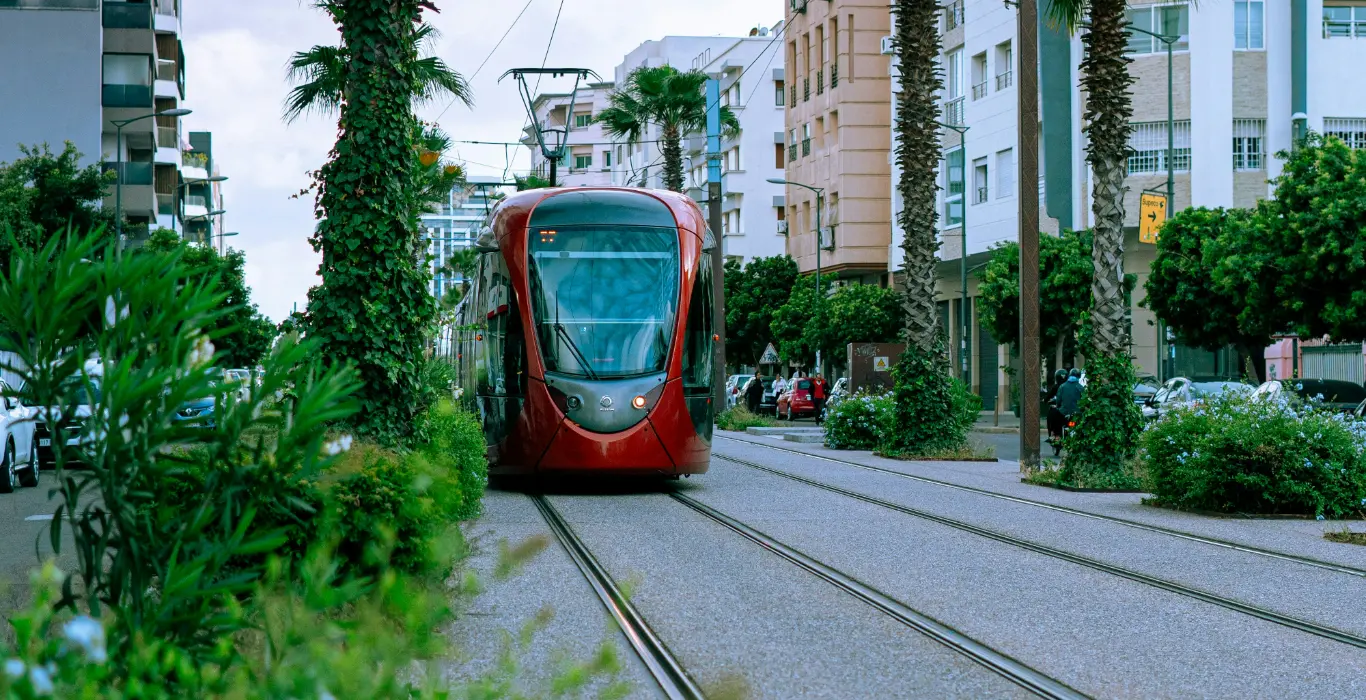
Today, Casablanca stands as Morocco’s undisputed economic powerhouse, driving nearly one-third of the nation’s industrial production and hosting the headquarters of major Moroccan and multinational corporations. The city continues to evolve with ambitious urban projects, including the Casablanca Finance City hub, expanded tram networks, and sustainable development initiatives. While it may lack the ancient medinas of other Moroccan cities, Casablanca offers a compelling portrait of contemporary Morocco—dynamic, ambitious, and globally connected. For travelers, the city provides a gateway to understanding modern Moroccan life, world-class architecture, coastal relaxation, and the vibrant energy of a metropolis where tradition and innovation coexist.


Best Morocco Trails is a premier travel agency dedicated to delivering exceptional travel experiences across the Kingdom of Morocco
Call Us
+212 678 818 696
Mail Us
contact@bestmoroccotrails.com