Best Morocco Trails | Tours, Excursions & Activities in Morocco

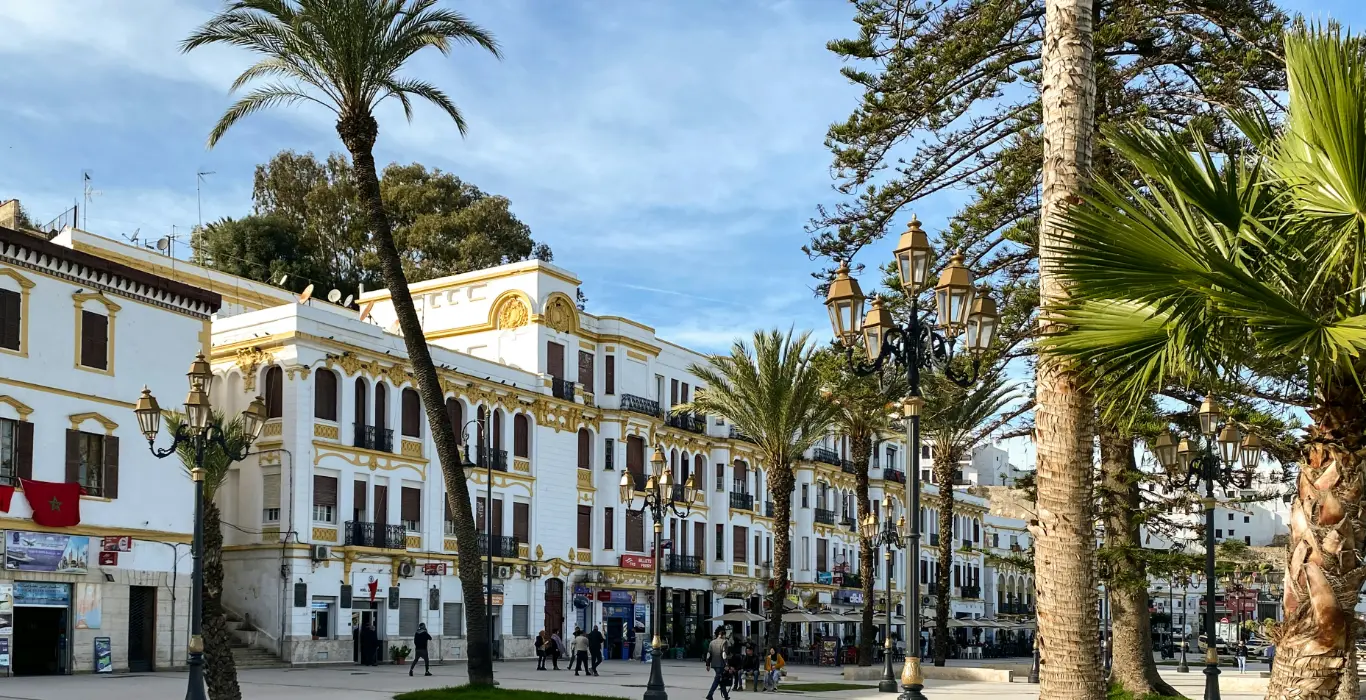
Tangier
Tangier (Arabic: طنجة, “Tanja”) is a major city in northwestern Morocco, strategically positioned at the western entrance to the Strait of Gibraltar where the Mediterranean Sea meets the Atlantic Ocean. Located approximately 14 kilometers (9 miles) from the southern coast of Spain, Tangier serves as a vital link between Africa and Europe. The city is the capital of the Tanger-Tétouan-Al Hoceïma region and home to over 1 million residents. With its unique geographical position, cosmopolitan heritage, and status as one of Morocco’s most important ports, Tangier has long been a crossroads of cultures, commerce, and civilizations.
History
Tangier’s history spans over 2,500 years, beginning with a Phoenician settlement in the 5th century BCE. The city subsequently came under Carthaginian, Roman, Byzantine, and Islamic rule. In 1661, Tangier became part of the dowry of Portuguese princess Catherine of Braganza when she married England’s King Charles II, making it England’s first overseas colony. The English fortified the city but abandoned it in 1684, after which it returned to Moroccan control under Sultan Moulay Ismail. In the 19th and early 20th centuries, Tangier’s strategic location attracted intense European interest. From 1923 to 1956, it was designated an International Zone, governed by multiple foreign powers, which fostered a uniquely cosmopolitan atmosphere. This period attracted writers, artists, spies, and adventurers, including Paul Bowles, William Burroughs, and Henri Matisse. After Morocco’s independence in 1956, Tangier was reintegrated into the kingdom and has since evolved into a modern economic and cultural hub while preserving its multicultural legacy.
Key Attractions
Historical & Cultural Sites
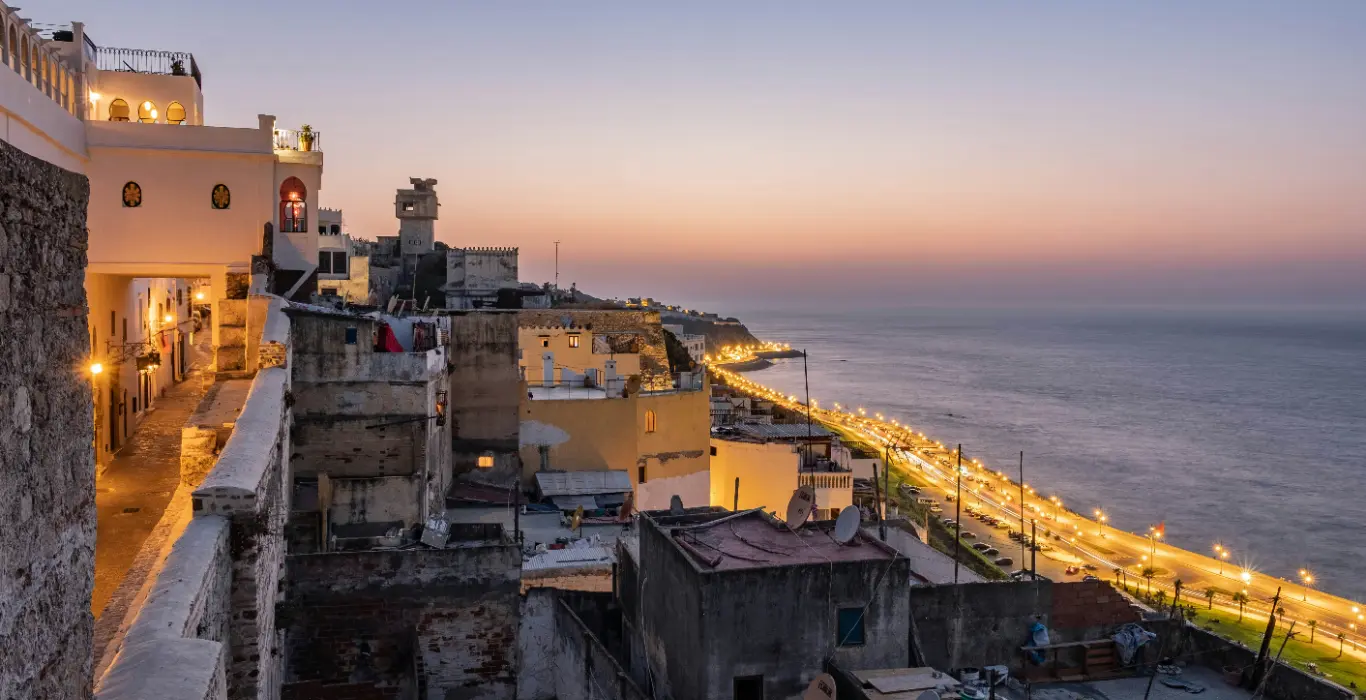
- Kasbah Museum: Housed in a 17th-century sultan’s palace within the old Kasbah, the museum showcases Moroccan art and artifacts from prehistoric to modern times, with beautiful Andalusian gardens and panoramic views.
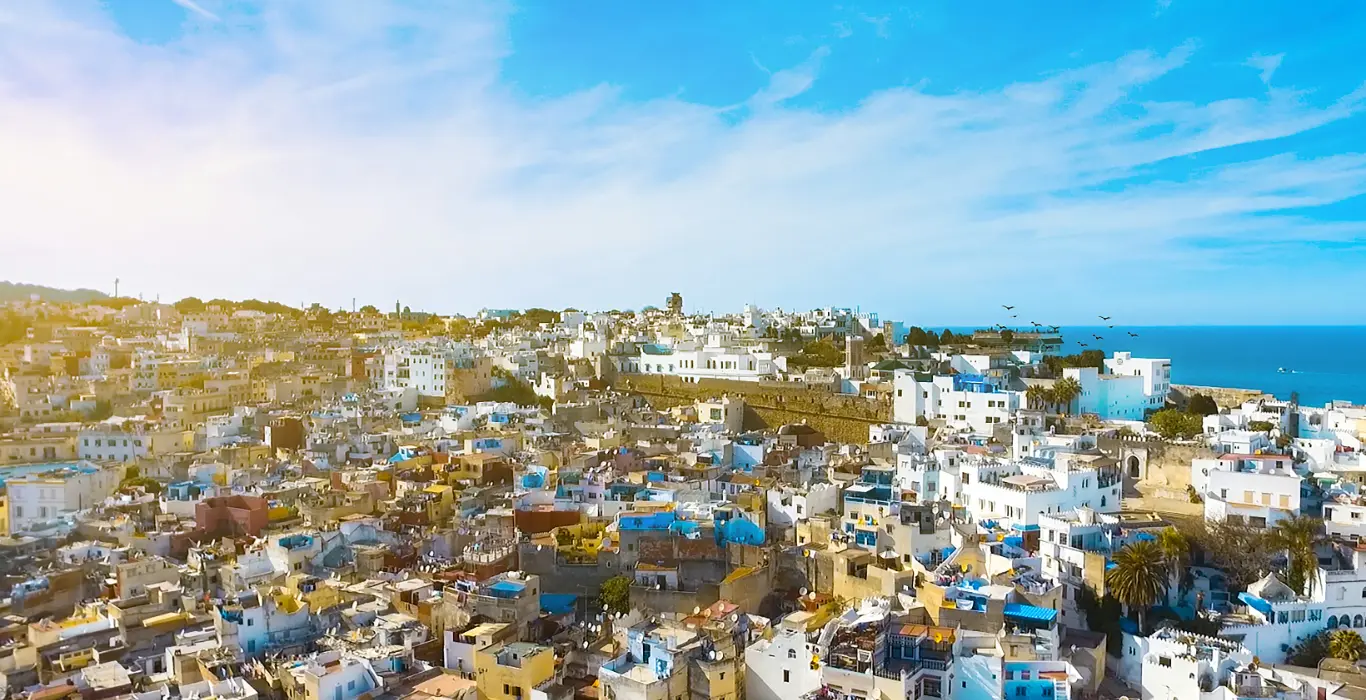
- Medina of Tangier: A labyrinthine old quarter with narrow alleyways, traditional souks, historic mosques, and vibrant street life, reflecting centuries of diverse cultural influences.
- Grand Socco and Petit Socco: The city’s main squares, serving as bustling gathering places and gateways between the modern city and the medina, steeped in literary and historical significance.
- Dar el Makhzen: The former royal palace within the Kasbah, now partially converted into a museum showcasing Moroccan heritage.
Natural & Scenic Attractions
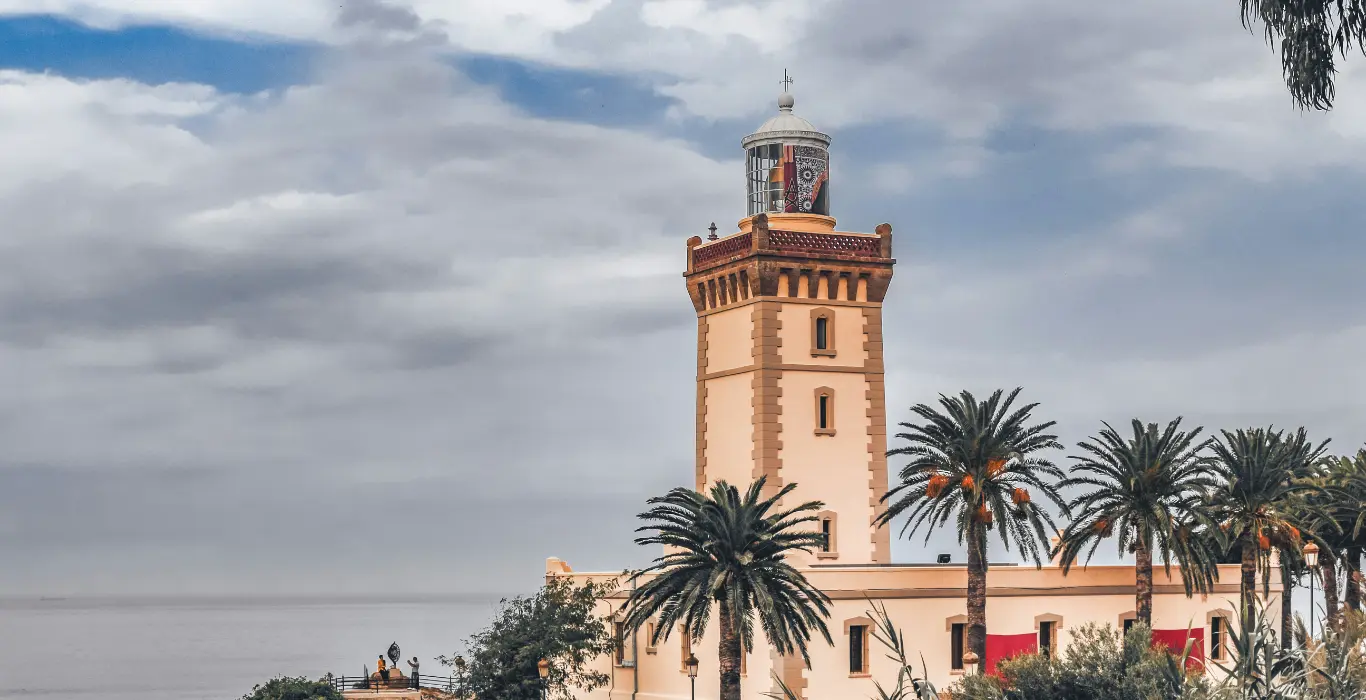
- Cap Spartel: The northwesternmost point of Africa, where the Atlantic Ocean and Mediterranean Sea converge, offering dramatic coastal views and the legendary Caves of Hercules.
- Caves of Hercules: A natural cave formation with a distinctive African-shaped opening overlooking the sea, steeped in mythology and history.
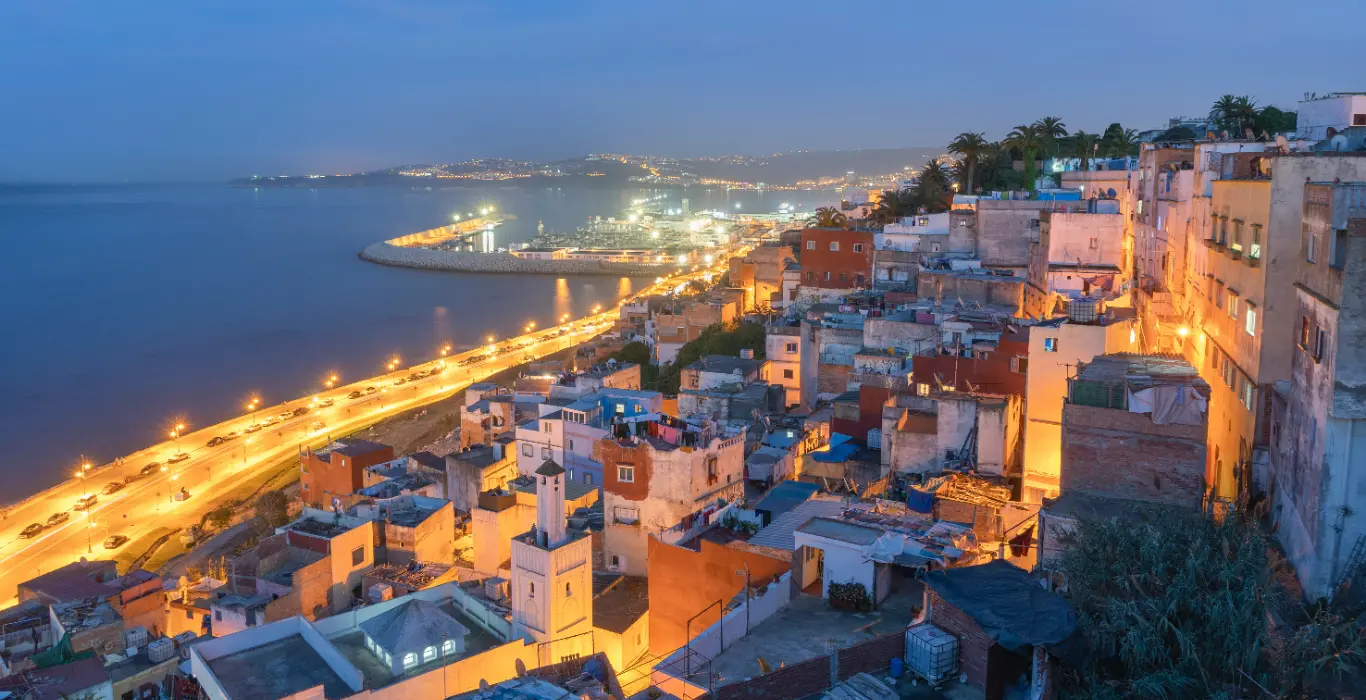
- Malabata Beach and Corniche: A scenic coastal promenade with beaches, cafes, and stunning views across the Strait of Gibraltar toward Spain.
- Jardin Perdis: A peaceful botanical garden featuring Mediterranean flora and tranquil walking paths.
Modern Landmarks & Cultural Institutions
- Tangier American Legation Museum: A historic building gifted to the United States by Morocco in 1821, now a museum and cultural center celebrating Moroccan-American relations and featuring art, manuscripts, and exhibitions.
- Grand Mosque of Tangier: A prominent 19th-century mosque with a distinctive square minaret, representing traditional Moroccan religious architecture.
- Tangier Ibn Battouta Stadium: A modern sports venue hosting football matches and cultural events.
- Tanger-Med Port: One of the Mediterranean’s largest and most modern ports, representing Tangier’s contemporary economic significance.
Culture
Tangier’s culture is a rich tapestry woven from Berber, Arab, Andalusian, European, and African influences, shaped by centuries as an international crossroads. The city has long been a haven for artists, writers, and intellectuals, earning nicknames like the “City of the Winds” and the “White Dove.” Its literary legacy includes figures such as Paul Bowles, whose novel The Sheltering Sky captured Tangier’s mystique, as well as William Burroughs, Allen Ginsberg, Jack Kerouac, and Tennessee Williams, who all found inspiration in the city’s bohemian atmosphere. Traditional Moroccan crafts thrive alongside contemporary art galleries, while music ranges from Andalusian classical to modern Gnawa and international sounds. The culinary scene reflects Tangier’s diversity, offering fresh seafood, traditional tagines, Spanish-influenced tapas, and French pastries. Multilingualism is common, with Arabic, Berber, French, and Spanish widely spoken. Tangier’s relaxed yet sophisticated ambiance, combined with its stunning natural setting, continues to attract creatives and travelers seeking inspiration and cultural richness.
Climate
Tangier enjoys a Mediterranean climate with Atlantic influences, characterized by mild, wet winters and warm, dry summers. Summer temperatures typically range from 24-28°C (75-82°F), moderated by cooling breezes from the sea. Winters are mild and rainy, with daytime highs of 15-17°C (59-63°F) and nighttime lows rarely dropping below 8°C (46°F). The city receives most of its rainfall between November and March, while summer months are generally dry. Humidity is moderate year-round, and the famous “Chergui” wind can occasionally bring hot, dry air from the Sahara. Spring (April-June) and autumn (September-October) offer ideal conditions for visiting, with comfortable temperatures, blooming landscapes, and clear skies perfect for exploring the city and surrounding natural attractions.
Modern Tangier
Today, Tangier is experiencing a renaissance as one of Morocco’s most dynamic and rapidly developing cities. Major infrastructure projects have transformed the urban landscape, including the high-speed Al-Boraq train line connecting Tangier to Casablanca (the first of its kind in Africa), the expanded Tanger-Med port complex, and a modernized airport. The city has emerged as an industrial and logistics hub, attracting international investment in automotive, aerospace, and textile sectors. Urban renewal projects have revitalized the medina and waterfront, while new cultural institutions and hotels cater to growing tourism. Despite modernization, Tangier retains its unique character and cosmopolitan spirit, balancing progress with preservation of its rich heritage. For visitors, Tangier offers an unforgettable blend of history, culture, natural beauty, and contemporary energy—a city where Africa and Europe converge, where past and future intertwine, and where the winds of change continue to inspire.


Best Morocco Trails is a premier travel agency dedicated to delivering exceptional travel experiences across the Kingdom of Morocco
Call Us
+212 678 818 696
Mail Us
contact@bestmoroccotrails.com